Professor advises House of Lords on how to protect victims of domestic abuse
Expertise from Manchester Met is helping to better protect the millions of people who are victims of domestic abuse in the UK each year.
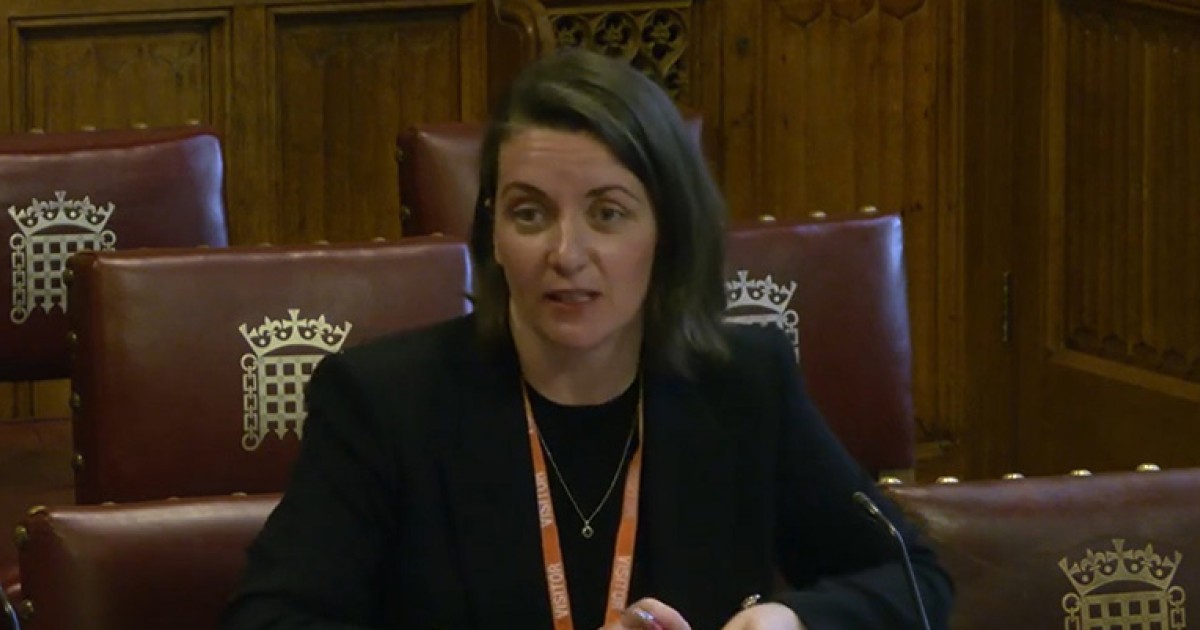
Professor in Safeguarding and Violence Prevention and Director of the Institute for Children’s Futures at Manchester Metropolitan University, Michelle McManus, was invited to the House of Lords to give oral evidence at the Domestic Abuse Act 2021 Committee on the challenges and practicalities associated with the Bill, to help better protect vulnerable women and children.
Alongside other experts in the field of safeguarding, criminal justice and sociology, Prof McManus shared her expertise on safeguarding in relation to the Domestic Abuse Act 2021, which was introduced to raise awareness and understanding of domestic abuse and its impact on victims, to improve protection for victims of domestic abuse, and to strengthen the support for victims of abuse provided by statutory agencies.
Domestic abuse remains one of the most significant demands on policing and safeguarding systems. The latest Office for National Statistics data estimates that around 3.8 million adults experienced domestic abuse in England and Wales in the last year, representing around 7.8% of the population, and domestic abuse-related crimes represented 15.4% of all offences recorded by the police.
Prof McManus said: “A key challenge is the tension between criminal justice outcomes for policing and safety outcomes for victims and survivors. It’s a real challenge which has implications for risk assessments, police training and for specialisms around how the police are responding to crime but importantly the onus is on victims to engage in a system which may not align with what they want from a safeguarding perspective.
“Victim safety, criminal justice enforcement and outcomes don’t always align. How do we hold perpetrators to account without pulling and dragging our victims through a process that they do not want to engage in? We need to do more work on that.”
The committee also considered questions relating to children, wo can be considered as victims if they see, hear or experience the effects of abuse, and what could be done to improve the police response in this respect. Speaking after the committee, Prof McManus, as Director of the Institute for Children’s Futures, said there were challenges in how this was applied.
“The recognition in the Domestic Abuse Act that children who see, hear or experience domestic abuse are victims in their own right is a very important step. It reflects decades of safeguarding research showing that exposure to domestic abuse can have profound effects on children’s wellbeing and development.
“However, the operational implications of this provision are still evolving. The Act recognises children as victims, but it does not create a specific statutory requirement for police to refer every domestic abuse incident involving children to children’s social care. Greater clarity on this would be welcomed.”
Prof McManus’ expertise in safeguarding children has previously helped to inform government policy when she appeared as an expert at a special education select committee alongside leaders from charities and government.