AI-powered pump monitoring innovation set to drive energy savings across UK infrastructure
A groundbreaking project is set to revolutionise energy efficiency across the UK’s water infrastructure, using artificial intelligence to help reduce carbon emissions and operational costs.
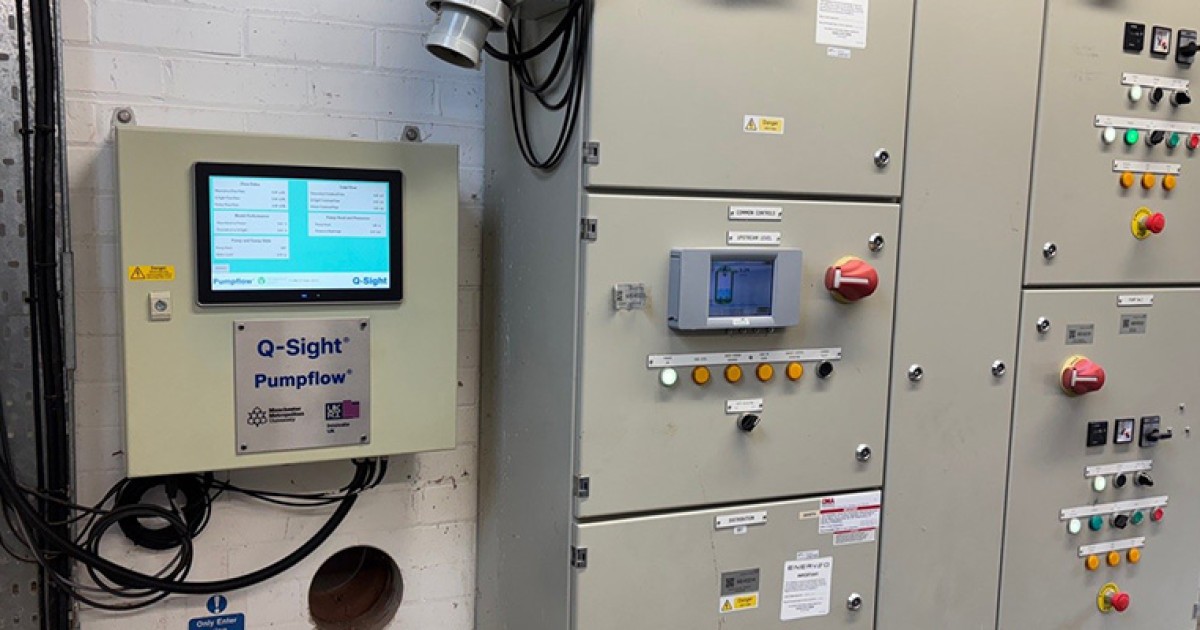
Researchers from Manchester Metropolitan University have partnered with Cheshire-based engineering firm Pumpflow Ltd to develop Q-Sight, an AI-powered vibration monitoring system that provides a non-invasive, data-driven alternative to traditional measurement tools.
The collaboration, supported by Innovate UK through a Knowledge Transfer Partnership (KTP), trialled the technology over four months, with Q-Sight significantly outperforming the test site’s existing ultrasonic flow meter, which was found to over-report flow by up to 40%.
The trial also revealed that by switching to a smaller pump and integrating solar-powered support, the site could cut energy use and carbon emissions by up to 30%, saving around £1,000 annually and avoiding nearly one tonne of CO₂.
The project demonstrates a scalable route towards data-driven, low-carbon modernisation of the UK’s water-management assets.
Q-Sight offers a timely solution by allowing operators to monitor pump performance remotely and ensure systems run at their most efficient levels – reducing energy waste, preventing costly breakdowns and extending equipment lifespan.
Stephen Egerton, Managing Director at Pumpflow Ltd, said: “Q-Sight is a game-changer for the pump industry. It gives operators the ability to monitor performance in real time, without the need for expensive infrastructure or invasive installation.
“This innovation not only helps reduce energy consumption and carbon emissions but also supports predictive maintenance to extend the lifespan of equipment. We’re thrilled to be working with Manchester Met to bring this technology to life and help drive the UK’s net-zero ambitions.”
The KTP is led by Luciano Gerber, Senior Lecturer in Computer Science at Manchester Met, with technical analysis authored by Agomon Hossain, Test and Development Engineer at Pumpflow and a former Manchester Met Engineering student.
Luciano said: “This project exemplifies how AI-powered monitoring can deliver measurable sustainability benefits. It’s a great example of how academic-industry partnerships can boost innovation and environmental impact.”
Funded by Innovate UK, this project is part of the UK-wide Knowledge Transfer Partnership programme, which connects businesses with academic institutions to drive innovation and growth.
Last month, Manchester Met, along with Innovate UK, The University of Manchester, and the University of Salford hosted the KTP 2025 Conference and Awards, celebrating 50 years of KTPs and showcasing the impact of collaborative innovation.
The University was recognised for its excellence in KTPs, winning both a KTP Golden Award for its collaboration with water standpipe supplier Aquacheck, and the “Changing the World” Award for an innovative partnership with family-owned wholesale foodservice Dunsters Farm.
Find out more about the award here.