Knee braces offer low-risk and effective option for managing painful arthritis, new research reveals
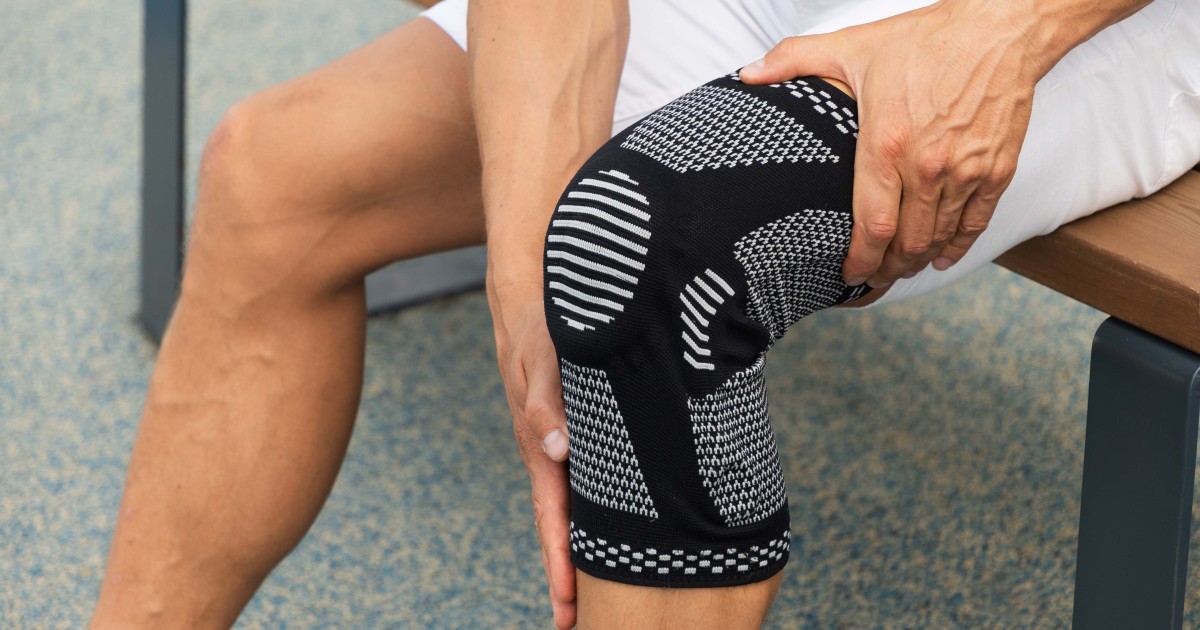
Using a knee brace can help people with painful knee osteoarthritis manage their symptoms, according to new research.
Published in the British Medical Journal (BMJ), the study is the world’s largest independent trial of knee braces for osteoarthritis. It found that people with osteoarthritis who received a tailored knee brace from their physiotherapist – alongside self-management advice and an exercise plan – reported a greater improvement in their symptoms than those who only received the advice and exercise plan.
Researchers from Manchester Metropolitan University, Keele University, who led the study, Sheffield Hallam, University of Manchester, University of Birmingham, Newcastle University, Boston University (USA), and University of Queensland (Australia) carried out the study which was funded by the National Institute for Health and Care Research (NIHR).
Around 1 in 5 adults over 45 are affected by painful knee osteoarthritis often causing significant long-term pain, lost time and productivity at work, and problems with daily activities. The research team investigated whether a knee brace might provide lasting benefit.
In this clinical trial, known as PROP OA, 466 people with knee osteoarthritis were assessed by a physiotherapist and then randomly assigned to one of two groups; one group received advice, written information, and an exercise plan; the other group received the same support but with the addition of a knee brace.
The type of brace was chosen to match an individual’s pattern of knee osteoarthritis and participants were shown how to fit the brace, had a follow-up appointment, and received text messages over the next six months to encourage ongoing knee brace use.
Participants were asked to complete questionnaires three, six, and 12 months later to see how their symptoms had changed.
Findings revealed that those randomised to the knee brace group had less pain, better physical function, and higher quality of life outcomes compared to the group who received the advice and exercise plan alone.
Although the benefits were small, people with osteoarthritis who used their brace as advised saw the greatest improvement and may still find them worthwhile for self-managing their condition.
Michael Callaghan, Professor of Clinical Physiotherapy at Manchester Met and co-author of the study, said: “We’re proud to collaborate on this ground-breaking study, which is helping to transform how people with painful knee osteoarthritis manage their symptoms. Our trial offers the robust evidence that has long been missing, showing that tailored knee braces – when used consistently – can empower people to self-manage their condition and significantly reduce pain.”
Melanie Holden, Professor of Musculoskeletal Rehabilitation at Keele University and lead author of the study, said: “There has been little high-quality evidence on whether knee braces help people with knee osteoarthritis. This is the world’s largest independent trial of knee bracing for knee osteoarthritis, and it shows that a tailored knee brace, alongside advice and exercise, is a low-risk option that patients may find worthwhile. This NIHR-funded research was only made possible through close collaboration between universities, the NHS, physiotherapists and the patients who took part, and we are incredibly grateful to everyone involved.”
Read the full paper: Provision of knee bracing for knee osteoarthritis (PROP OA): multicentre, parallel group, superiority, statistician blinded, randomised controlled trial