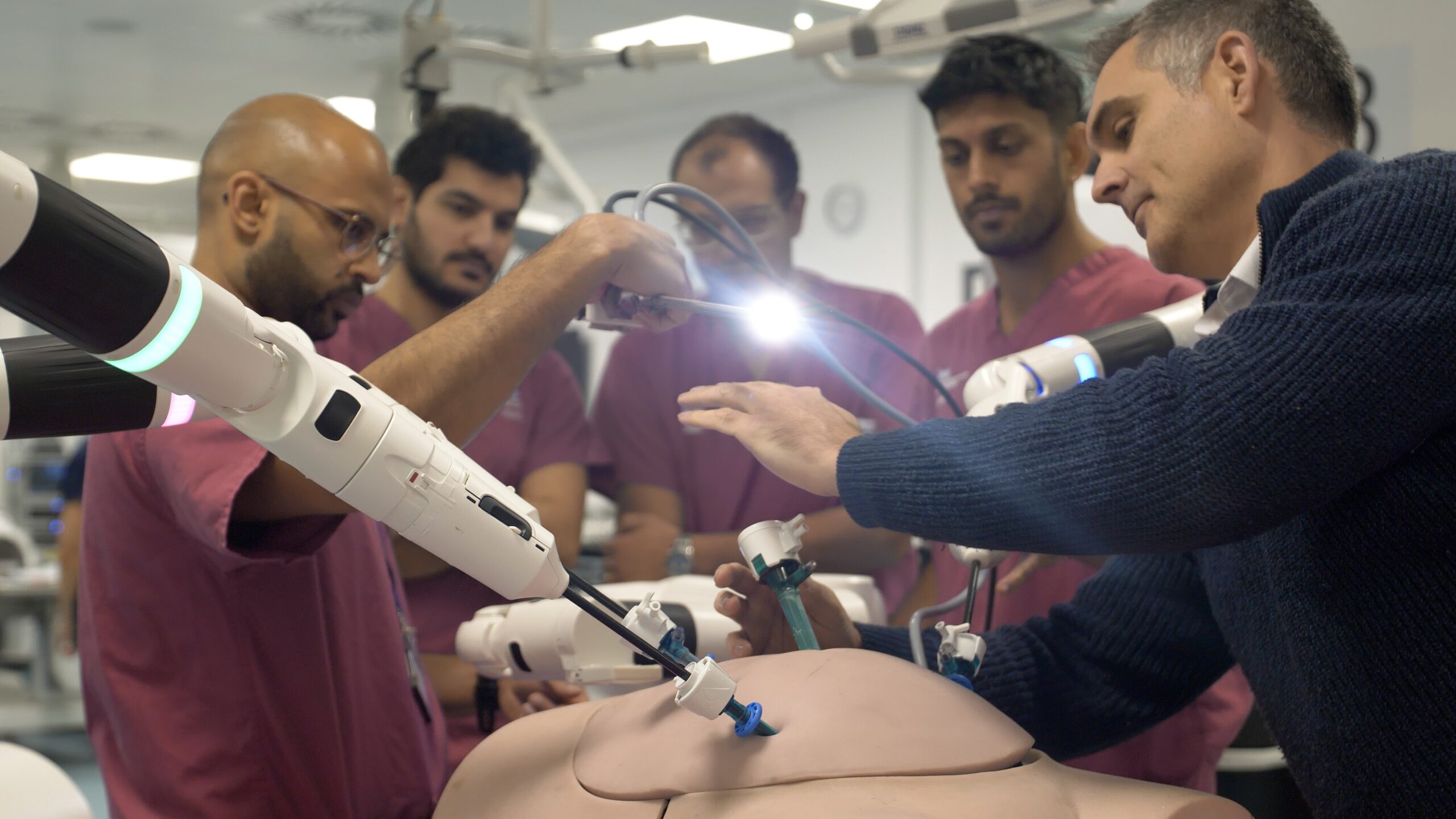
Surgeons across Manchester and Trafford are benefitting from new world-class teaching in robotics – leading the way on the future of how operations are performed.
Manchester University NHS Foundation Trust (MFT), part of the Shelford Group, is one of the first trusts to take part in the Shelford Surgical Training in Advanced Robotic Technology (START) programme. The programme aims to deliver comprehensive surgical robotics training across multiple platforms to trainees across the country for the first time.

The NHS in England plans to significantly expand robotic surgery. The UK Government’s recently published 10 Year Health Plan for England states that the NHS will roll out the use of robot-assisted surgery as a standard for a wider range of procedures to increase surgical capacity, improve efficiency and help reduce waiting times.
The START programme provides the opportunity for surgical trainees to develop their skills, knowledge and expertise across Intuitive’s da Vinci, CMR Surgical’s Versius and Medtronic’s Hugo™ robot-assisted surgical systems.
The training, based on the highly successful Northern Robotics Training Programme, has over 50 surgical trainees registered for the pilot year and will involve a range of simulation tasks and hands on wet lab training. Trainees will also be provided access to a bespoke skills tracker which outlines predefined surgical skills and competencies required for each phase of their training, allowing them to track and evaluate their progress throughout the course.

Dr Matt Makin, Joint Chief Medical Officer at MFT, said: “I am delighted that we are one of the first trusts to benefit from the pioneering START programme. Performing surgery with robotics is the future of how we deliver healthcare across the NHS as it makes operations less invasive and helps to support faster recovery times in patients. As the largest NHS Trust in the country, it is important that we continue to invest in the education of our colleagues so they can develop and in turn improve the outcomes of our patients”.
Mr Tim Mitchell, President, Royal College of Surgeons for England, said: “Robotic-assisted surgery has the potential to transform patient care by enhancing surgical precision, improving visualisation, and supporting better operative outcomes, as well as enabling faster recovery and fewer complications. It is a rapidly developing area of surgical expertise, and the College welcomes initiatives such as the START programme that aim to advance training and education in this field.”
Find out more about the robotics training our surgeons are undertaking in this short video: