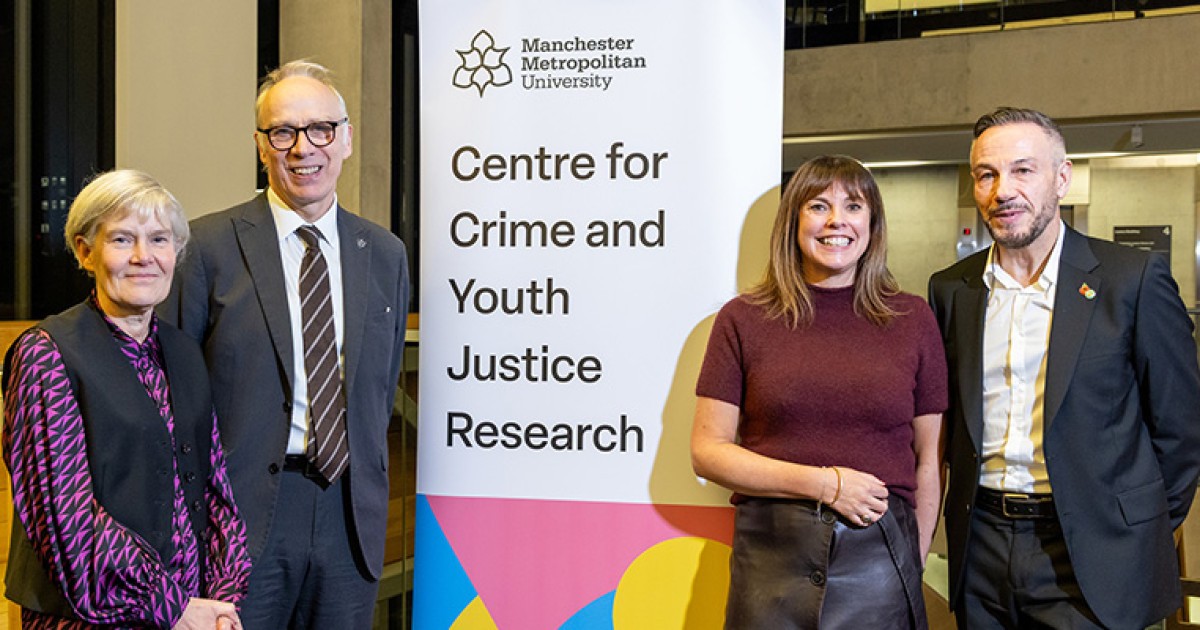
An award-winning partnership that put children’s voices at the front and centre of youth justice practice and policy in Greater Manchester is returning for a new project – with further ambitious targets for positive change.
Researchers from Manchester Met’s Centre for Crime and Youth Justice Research (formerly Manchester Centre for Youth Studies) will work with Greater Manchester Combined Authority (GMCA), the ten Greater Manchester local authorities, Greater Manchester Police (GMP), and the wider criminal justice system to build on their previous pioneering project that led to lasting and fairer changes in the way that young people are treated and heard within the youth justice system.
The project – titled Greater Manchester Youth Justice Transformation System – took place between 2010 and 2015 and achieved nationally-recognised impact by directly involving justice-involved young people in creative research and engagement activities like boxing, rapping and urban art.
The findings led to a new way of working called Participatory Youth Practice (PYP), the first of its kind to be created by and with justice-involved young people based on their lived experiences. Today, PYP is still being used effectively across Greater Manchester’s youth justice system, including its flagship ‘Voice of the Child’ policy which enables children to feel respected and have their views heard, and can ultimately decrease re-offending rates.
The newly launched 2025-2028 Greater Manchester Youth Justice Transformation System will build on this success by again working directly with justice-involved young people to create updated policy and practice that develops the ‘Voice of the Child’ in situations where they are in early contact with the justice system, such as during interviews or home visits.
Through workshops, interviews, training and policy updates, is hoped that this new three-year project will help to divert more children away from entering the youth justice system, break the cycle of re-offending, and reduce costs and pressure on services across the region.
Hannah Smithson, Professor of Criminology and Youth Justice at Manchester Met’s Centre for Crime and Youth Justice Research, said: “Through our original partnership which began a decade ago, we achieved huge organisational and cultural changes throughout all child-centred services in Greater Manchester. This ‘next generation’ partnership will build on that lasting legacy.”
Delivering real change
Manchester Met’s Centre for Crime and Youth Justice Research (formerly Manchester Centre for Youth Studies) is a world-leading, award-winning research centre that is internationally recognised for its ethos of promoting innovative youth-informed research with marginalised groups of young people.
Both the previous and new Greater Manchester Youth Justice Transformation Systems projects are what’s known as Knowledge Transfer Partnerships (KTPs), UK-wide programmes designed to foster innovation by linking organisations or businesses with academic institutions.
2025 marks the 50th anniversary since the inception of KTPs, and last month Manchester Met joined forces with funder Innovate UK, The University of Manchester and the University of Salford to host the KTP 2025 Conference and Awards, at which Manchester Met won two awards for the transformational impact of its partnerships with local businesses.
This follows previous recognition of the impact of the 2010-2015 Greater Manchester Youth Justice Transformation System KTP when it won KTP Project of the Year at the 2019 Times Higher Education Award.
Overseeing and coordinating the new partnership will be newly appointed full-time KTP Associate Andrea Nisbet who has previously worked at Manchester Met on youth justice-related projects. She said: “I am very excited to be working on this new KTP, which will build on the success of the previous one.
“I am passionate about children and young people being central to developing youth justice research, policy and practice – and having their voice heard, listened to and acted on.”
Kate Green, Deputy Mayor of Greater Manchester, added:“We are proud to be working alongside Manchester Met on this innovative Knowledge Transfer Partnership. Making our criminal justice system more child-centred is a key priority for Greater Manchester, reflected in our Standing Together: Police and Crime Plan and our new Youth Justice Framework. We’ve already made progress through initiatives like GMP’s Child-Centred Policing Strategy, and this new project will build on that momentum as well as including the voice of victims.
“Over the next three years, we want to go further – creating policies and practices that not only listen to children’s voices but act on them to deliver real change. By doing so, we can help divert more young people away from the justice system, reduce re-offending, and strengthen communities across Greater Manchester. This is about giving every child the best chance to thrive and ensuring our approach to justice is fair, compassionate, and effective.”
Dr Anne-Marie Day, Senior Lecturer in Criminology at Manchester Met’s Centre for Crime and Youth Justice Research and academic supervisor for the new partnership, added: “We are excited to work with our partners on another impactful project which will yet again place children and young people’s voice at the forefront of youth justice policy. If we are to work effectively to help reduce children’s involvement in that system, their voices must be heard.”